Science is amazing, wonderful, and fascinating. There are so many science discoveries that you don't ever imagine. This is some of the most fascinating science discovery....
If you're looking for some fun science experiments for kids then you've come to the right place. Check out our free experiments section, full of fascinating hands-on experiments that are a great way to enjoy the world of science....
Global warming is the process of increasing the average temperature of the atmosphere, ocean, and land surface. Most of the increase in global average temperature, likely caused by increased concentrations of greenhouse gases resulting from human activity through the greenhouse effect.
Our solar neighborhood is an exciting place. The Solar System is full of planets, moons, asteroids, comets, minor planets, and many other exciting objects. Learn about Io, the explosive moon that orbits the planet Jupiter, or explore the gigantic canyons and deserts on Mars.
Heat is defined as thermal energy possessed by a substance. In general, to detect the presence of heat possessed by an object that is by measuring the temperature of the object.
Sound is one of a wave, the longitudinal wave. Longitudinal
waves are waves that the direction parallel or coincide with the direction of
vibration. Examples of longitudinal waves are waves and slinki waves sound in
air.
The sound of the waves has the same properties with the
properties of waves, namely:
a. Can be reflected (reflection)
The sound can occur when sound is reflected on the surface of
a hard object, such as the surface of the stone wall, cement, steel, glass and
zinc.
Example:
Our voices are louder in the cave due to the reflection of
sound from the walls of the cave.
Our voices inside the building or music studio that does not
use a silencer.
b. Can be refracted
Reflected is bending toward trajectory wave
after passing through the boundary between two different media.
Example: At night the sound of thunder sounded louder than
during the day because of the refraction of sound waves.
c. Can be combined (interference)
As well as the interference of light, sound interference also
requires two coherent sources of sound.
Example: Two loudspeakers are connected to a signal generator
(audio frequency generator tool) can function as two coherent sources of sound.
d. Can be bent
(diffracted)
Diffraction is flexing incident sound wave when it passes
through a narrow slit. Example: We can hear the voices of different people and
covered all subjects, as the sound passes through narrow slits that are
passable sound.
The sound occurs when there are three conditions as follows.
1. The sound source
Objects that can generate sound called sound source. Examples
of sound sources is a variety of musical instruments, such as guitar, violin,
piano, drums, trumpet and flute.
2. Substance Intermediaries (Medium)
Sound waves are longitudinal waves that do not appear. The
sound can only propagate through the medium of an intermediary. For
example air, water, and wood. Without an
intermediary medium sound can’t propagate so it will not be heard. Based on
research, a solid sound propagation medium is best compared to liquids and
gases.
3. Listener
The sound can be heard when
there are listeners. Human auditory equipped, ie the ear hearing aids.
The vibrations emanating from objects that vibrate, up to our
ears in general through the air in the form of waves. Because the waves can be
in the air only longitudinal waves, the sound propagates through the air is
always in the form of longitudinal waves. We need to remember that it is
sealing and longitudinal waves can propagate through extensional three states
of matter are: solid state, liquid and gas.
There are three
aspects of sound as follows:
a. The sound produced by a source such as another wave, the
sound source is vibrating body.
b. Transferred energy and sound sources in the form of longitudinal
waves.
c. The sound is detected (known) or an instrument by ear wave
propagation speed of sound in air is affected by the temperature and density of
matter trajectory
Based on the frequency, the sound can be classified into
three. There are as follows.
1. Infrasound, sound whose frequency is below 20 Hz.
2. Audiosonik, is a sound frequency between 20-20000 Hz.
3. Ultrasonic, is the sound frequency above 20,000 Hz.
The
human ear has a hearing limit. Sound that can be
heard is the sound man with a frequency of 20 Hz to 20,000 Hz, which is
audiosonik. Infrasound and ultrasound can’t be heard by humans. Infrasound can be heard dogs, crickets, geese, and
horses. Ultrasound can be heard by bats and dolphins.
Sound Reflection
The
sound will be reflected if the surface of a hard object, such as a stone wall
or a surface of cement, steel, glass, and zinc. In contrast, most of the sound
will be absorbed if the surface is soft objects, such as cloth, rubber, foam,
cork, rugs, and wool (silencer objects). If we say a few words then a few
syllables or words between the sound comes with reflected sound mutually
destructive, so that we only share a single audible to the last syllable of the
reflected sound. This event is
called reverberation or boom. In a confined
space such as a cinema, concert hall music, to reduce echo, wall and ceiling
mounted silencer.
Sound
Reflection Law
The following two laws of reflection of light are applicable
to sound waves as well
1. The incident wave, the normal to the
reflecting surface and the reflected wave at the point of incidence lie in the
same plane.
2. The angle of incidence ∠i is equal to the angle of reflection ∠r.
Kinds of Sound Reflection
Reflected sound can be divided into 3 kinds. There are as
follows.
1.Strengthen the reflected sound is reflected sound original
sound that can amplify the original sound. It usually occurs in circumstances
between the sound source and the reflective wall is not so far away (less than
10 meters)
2. The boom is reflected sound that sounded almost
simultaneously with the original sound. Usually occurs at a distance of between
10 to 20 meters.
3. The echo is reflected sound is heard after the original
sound. Usually occurs at a
distance of more than 20 meters.
Application of Sounds Reflection
1. Detecting Defects and Cracks on Metal
To detect cracks in metal or concrete structures used
ultrasonic scanning were used to check for hidden cracks on parts of the
aircraft, which later could endanger aircraft flight. In a routine examination,
vital parts of the in-plane ultrasonic scanning manner. If there are cracks in
the metal, ultrasonic reflections from cracks will be detected. Cracks
are then examined and addressed immediately before the aircraft allowed flying.
2. Measure
the depth of the sea
By using SONAR we can
measure the depth of the sea. At the bottom of the vessel wall is installed a
vibration source (oscillator). Mounted near the receiver oscillator vibrations
(hydrophone). If the transmit pulse takes a long time to get back to the
receiver, in and vice versa. If the time
of vibration (sound) propagating (t) for a distance second commute is 2 L
meters, the propagation speed can be calculated as follows.
V = 2L / T or 2L =
v x t or L = v x t / 2
Where:
v = propagation speed of
sound (m / s)
L = inside the sea (m)
t
= time (t)
3. Knowing the position of submarines by sending ultrasonic
waves from the boat to the underwater hunter.
4. Knowing the position of schools of fish in the sea.
5. Knowing the pockets of petroleum basins by sending sound
waves into the ground.
6. The Use in Medical
Examination to see inside the human body using ultrasonic
pulses is called ultrasound (ultrasonography). In the human body, ultrasonic pulses are
reflected by the tissues, bones and body fluids with different density.
Reflecting ultrasonic pulses emitted Ulsa can produce images of body parts that
were found by the ultrasonic pulses on the oscilloscope screen.
Ultrasound is particularly useful in medical diagnosis since some of the
following.
Ultrasonic much
safer than X - rays that can damage the cells of the human body due to
ionization, it is safer to use ultrasound to view the fetus in the mother's
stomach than light - X.
Ultrasonic can used
continuously transform and see the movement of the fetus or lever one, without
injuring or pose a risk to patients.
Ultrasound can
measure the depth of an object under the skin's surface, while the resulting
image rays - X is flat with no clue about the depth.
Ultrasound can
detect differences in the tissues in the body that can’t be done-ray - X. This
ultrasonic sometimes able to find tumors or clots in the human body.
Resonance
In sound applications, a resonant frequency is a natural
frequency of vibration determined by the physical parameters of the vibrating
object. This same basic idea of physically determined natural frequencies applies
throughout physics in mechanics, electricity and magnetism, and even throughout
the realm of modern physics. Some of the implications of resonant frequencies
are:
1. It is easy to get an object to vibrate at its resonant
frequencies, hard to get it to vibrate at other frequencies.
2. A vibrating object will pick out its resonant frequencies
from a complex excitation and vibrate at those frequencies, essentially
"filtering out" other frequencies present in the excitation.
3. Most vibrating objects have multiple resonant
frequencies.
Resonance
and Musical Instruments
Musical instruments
produce their selected sounds in the same manner. Brass instruments typically
consist of a mouthpiece attached to a long tube filled with air. The tube is
often curled in order to reduce the size of the instrument. The metal tube
merely serves as a container for a column of air. It is the vibrations of this
column that produces the sounds that we hear. The length of the vibrating air
column inside the tube can be adjusted either by sliding the tube to increase
and decrease its length or by opening and closing holes located along the tube
in order to control where the air enters and exits the tube. Brass instruments
involve the blowing of air into a mouthpiece. The vibrations of the lips
against the mouthpiece produce a range of frequencies. One of the frequencies
in the range of frequencies matches one of the natural frequencies of the air
column inside of the brass instrument. This forces the air inside of the column
into resonance vibrations. The result
of resonance is always a big vibration - that is, a loud sound.
Woodwind
instruments operate in a similar manner. Only, the source of vibrations is not
the lips of the musician against a mouthpiece, but rather the vibration of a
reed or wooden strip. The operation of a woodwind instrument is often modeled
in a Physics class using a plastic straw. The ends of the straw are cut with a
scissors, forming a tapered reed. When air is blown through the reed,
the reed vibrates producing turbulence with a range of vibrational frequencies.
When the frequency of vibration of the reed matches the frequency of vibration
of the air column in the straw, resonance occurs. And once more, the result of
resonance is a big vibration - the reed and air column sound out together to
produce a loud sound. As if this weren't silly enough, the length of the straw
is typically shortened by cutting small pieces off its opposite end. As the
straw (and the air column that it contained) is shortened, the wavelength
decreases and the frequency was increases. Higher and higher pitches are
observed as the straw is shortened. Woodwind instruments produce their sounds
in a manner similar to the straw demonstration. A vibrating reed forces an air
column to vibrate at one of its natural frequencies. Only for wind instruments,
the length of the air column is controlled by opening and closing holes within
the metal tube (since the tubes are a little difficult to cut and a too
expensive to replace every time they are cut).
The digestive system
is made up of the gastrointestinal (GI) tract—also called the digestive
tract—and the liver, pancreas, and gallbladder. The GI tract is a series of
hollow organs joined in a long, twisting tube from the mouth to the anus. The
hollow organs that make up the GI tract are the mouth, esophagus, stomach,
small intestine, large intestine—which includes the rectum—and anus. Food
enters the mouth and passes to the anus through the hollow organs of the GI
tract. The liver, pancreas, and gallbladder are the solid organs of the
digestive system. The digestive system helps the body digest food.
Bacteria in the GI
tract, also called gut flora or microbiome, help with digestion. Parts of the
nervous and circulatory systems also play roles in the digestive process.
Together, a combination of nerves, hormones, bacteria, blood, and the organs of
the digestive system completes the complex task of digesting the foods and
liquids a person consumes each day.
THE IMPORTANCE
Digestion is important for breaking down food into nutrients, which the body
uses for energy, growth, and cell repair. Food and drink must be changed into
smaller molecules of nutrients before the blood absorbs them and carries them
to cells throughout the body. The body breaks down nutrients from food and
drink into carbohydrates, protein, fats, and vitamins.
Carbohydrates. Carbohydrates are the sugars, starches, and
fiber found in many foods. Carbohydrates are called simple or complex,
depending on their chemical structure. Simple carbohydrates include sugars
found naturally in foods such as fruits, vegetables, milk, and milk products,
as well as sugars added during food processing. Complex carbohydrates are
starches and fiber found in whole-grain breads and cereals, starchy vegetables,
and legumes. The Dietary Guidelines for Americans, 2010, recommends
that 45 to 65 percent of total daily calories come from carbohydrates.
Protein. Foods such as meat, eggs, and beans consist of
large molecules of protein that the body digests into smaller molecules called
amino acids. The body absorbs amino acids through the small intestine into the
blood, which then carries them throughout the body. The Dietary Guidelines
for Americans, 2010, recommends that 10 to 35 percent of total daily
calories come from protein.
Fats. Fat molecules are a rich source of energy for the
body and help the body absorb vitamins. Oils, such as corn, canola, olive,
safflower, soybean, and sunflower, are examples of healthy fats. Butter,
shortening, and snack foods are examples of less healthy fats. During
digestion, the body breaks down fat molecules into fatty acids and glycerol.
The Dietary Guidelines for Americans, 2010, recommends that 20 to 35
percent of total daily calories come from fat.
Vitamins. Scientists classify vitamins by the fluid in which
they dissolve. Water-soluble vitamins include all the B vitamins and vitamin C.
Fat-soluble vitamins include vitamins A, D, E, and K. Each vitamin has a
different role in the body’s growth and health. The body stores fat-soluble
vitamins in the liver and fatty tissues, whereas the body does not easily store
water-soluble vitamins and flushes out the extra in the urine.
THE DIGESTIVE PROCESS
Digestion works by
moving food through the GI tract. Digestion begins in the mouth with chewing
and ends in the small intestine. As food passes through the GI tract, it mixes
with digestive juices, causing large molecules of food to break down into
smaller molecules. The body then absorbs these smaller molecules through the
walls of the small intestine into the bloodstream, which delivers them to the
rest of the body. Waste products of digestion pass through the large intestine
and out of the body as a solid matter called stool.
Table 1 shows the
parts of the digestive process performed by each digestive organ, including
movement of food, type of digestive juice used, and food particles broken down
by that organ.
Table 1. The digestive process
Organ
Movement
Digestive Juices
Used
Food Particles
Broken Down
Mouth
Chewing
Saliva
Starches
Esophagus
Swallowing
None
None
Stomach
Upper muscle in stomach relaxes to
let food enter and lower muscle mixes food with digestive juice
Stomach acid
Protein
Small intestine
Peristalsis
Small intestine
digestive juice
Starches, protein, and
carbohydrates
Pancreas
None
Pancreatic juice
Starches, fats, and
protein
Liver
None
Bile acids
Fats
The large, hollow organs of the GI tract contain a layer of muscle that
enables their walls to move. The movement of organ walls—called
peristalsis—propels food and liquid through the GI tract and mixes the contents
within each organ. Peristalsis looks like an ocean wave traveling through the
muscle as it contracts and relaxes.
Esophagus. When a person swallows, food pushes into the
esophagus, the muscular tube that carries food and liquids from the mouth to
the stomach. Once swallowing begins, it becomes involuntary and proceeds under
the control of the esophagus and brain. The lower esophageal sphincter, a
ringlike muscle at the junction of the esophagus and stomach, controls the passage
of food and liquid between the esophagus and stomach. As food approaches the
closed sphincter, the muscle relaxes and lets food pass through to the stomach.
Stomach. The stomach stores swallowed food and liquid,
mixes the food and liquid with digestive juice it produces, and slowly empties
its contents, called chyme, into the small intestine. The muscle of the upper
part of the stomach relaxes to accept large volumes of swallowed material from
the esophagus. The muscle of the lower part of the stomach mixes the food and
liquid with digestive juice.
Small intestine. The muscles of the small intestine mix
food with digestive juices from the pancreas, liver, and intestine and push the
mixture forward to help with further digestion. The walls of the small intestine
absorb the digested nutrients into the bloodstream. The blood delivers the
nutrients to the rest of the body.
Large intestine. The waste products of the digestive
process include undigested parts of food and older cells from the GI tract
lining. Muscles push these waste products into the large intestine. The large
intestine absorbs water and any remaining nutrients and changes the waste from
liquid into stool. The rectum stores stool until it pushes stool out of the
body during a bowel movement.
Digestive juices contain enzymes—substances that speed up chemical reactions
in the body—that break food down into different nutrients.
Salivary glands. Saliva produced by the salivary glands
moistens food so it moves more easily through the esophagus into the stomach.
Saliva also contains an enzyme that begins to break down the starches from
food.
Glands in the stomach lining. The glands in the stomach
lining produce stomach acid and an enzyme that digests protein.
Pancreas. The pancreas produces a juice containing several
enzymes that break down carbohydrates, fats, and proteins in food. The pancreas
delivers digestive juice to the small intestine through small tubes called
ducts.
Liver. The liver produces a digestive juice called bile.
The gallbladder stores bile between meals. When a person eats, the gallbladder
squeezes bile through the bile ducts, which connect the gallbladder and liver
to the small intestine. The bile mixes with the fat in food. The bile acids
dissolve fat into the watery contents of the intestine, much like how
detergents dissolve grease from a frying pan, so the intestinal and pancreatic
enzymes can digest the fat molecules.
Small intestine. Digestive juice produced by the small
intestine combines with pancreatic juice and bile to complete digestion. The
body completes the breakdown of proteins, and the final breakdown of starches
produces glucose molecules that absorb into the blood. Bacteria in the small
intestine produce some of the enzymes needed to digest carbohydrates.
Science is concern with
making sense out of the environment . The early stages of this “ search for sense”
usually involve objects in the environment things that can be seen or touched.
These could be objects you see every day, such as a glass of water, a moving
automobile, or a running dog. One way is to assume that all events in nature
have natural causes. We can then try to arrange a series of observation or
tests to learn what those causes are. Science is the word that we apply to this
process. The goal of science is to understand the world around us. There are,
however, many important fields of human endeavor that study the world around us
but are not considered sciences.
Scale is anything that can be
measured and expressed in value. If the terms of the direction and value,
magnitude grouped into two, namely:
Scalar or fundamental quantity, the quantity that
only has value without having direction. Example: mass, length, time, energy,
effort, temperature, pace and distance.
Vector or derived quantity, the amount of which has a value and a direction.
Example: style, weight, strong currents, velocity, acceleration and
displacement.
Meanwhile, based on the type of unit,
size grouped into two, namely:
a.Scale Basic
Principal amount is the amount that
the unit has been set in advance and are not composed of other quantities.
Principal amount of seven scale. Seven units are based on the principal amount
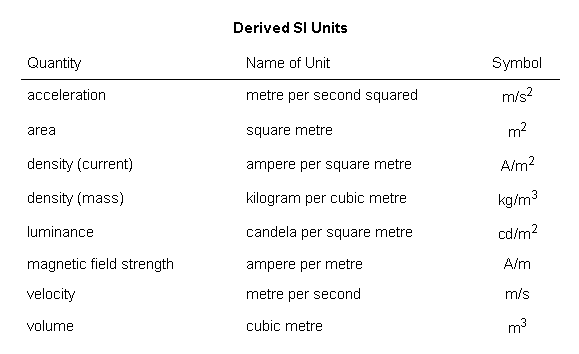
and the international system of units (SI) as indicated in the following table.
International system of units (SI) unit system means that the
most widely used around the world, with international best practice.
b. Scale Derivatives
Scale derivative is a combination of units of the principal amount.
Examples of broad scale derivative is a rectangular area. Area equal to the
length multiplied by width, where length and width are both units of length.
Note the magnitude derived tables, units and dimensions below.
Unit is a measure of a quantity used to measure. The types of
units namely:
a. Raw Unit
Standard unit is the unit that has
been recognized and its use internationally agreed with the so-called tau
international units (SI).
Example: meter, kilogram, and second.
International system of units is divided into two, namely:
1. MKS system (Meter Kilogram Sekon)
2. System CGS (Centimeter Gram Second)
b. Unit Not Raw
Non-standard unit is the unit that is
not recognized internationally and is only used in a certain area.Example: fathoms, feet, legs, arms, tumbak, brick and steps
Science works best when scientists
every where read each other’s paper, check each other’s experiment and argue
about what those experiments mean. Because most experiment involve measurement
in which to present their findings. Scientists use the metric system of length,
volume, mass, and temperature when describing experiments and data. The metric
system is a decimal system based on the certain standards and scale on
multiples of 10. The metric system is also known as the International system of
Units or SI.
1. Length
The basic unit of length in the metric system is a meter
(m). One meter is roughly equivalent to 39,4 inchies, alittle longer than a
yard. To measure objects and distance much larger or smaller than a meter by
multiples of 10. A centimeter (cm) is 1/100 of a meter-about the width of the
nail on your pinky. As you may have guessed, the prefix centi- means on hundredth. A milimeter (mm) is 1/1000 of a meter.
The length-such as those used to describe living thing cells, pieces of cells,
and molecules. To measure the distance much greater than a meter, scientists
used a unit called the kilometer (km). One kilometer is contain 1000 meter and
use prefix kilo-
2.Volume
Volume is the amount of space an object occupies. The
basic metric unit of volume are the liter (L) for liquid and the cubic
centimeter (cc or m3) for solids. A liter contain slighty more liquid
than a quart. To measure small volume of liquids, scientists use fraction of a
liter called milliliters (mL). There are 1000 milliliters in a single liter. A
cubic centimeters is the volume of a solid that measures 1 cm by 1 cm by 1 cm.
Keep in mind that 1 milliliter is equal in volume to 1 cubic centimeter or 1
mL=1 cc.
3.Mass and Weight
Mass is measure of the amount of matter in an object.
Weight is a measure of the pull of gravity on that mass. In outer space, the
weight of an object may vary with it’s position, but its mass always remain the
same. On earth’s surface, however, an object’s mass and weight can usually be
considered constant and are often used interchangeably. The basic metric unit
scientists used to describe mass is the kilogram (kg). One kilogram is equal to
approximately 2,2 pounds. The mass of small objects is measured in grams (g).
One gram is 1/1000 of kilograms.
4.Temperature
The metric system measures
temperature using the Celcius scale (0C). On this scale water
freezes at 00C and boils at 1000C. Each celcius degree,
therefore, represents exactly 1/100 of the temperature range between the
freezing and boiling points of water. Normal human body temperature is about 370C
and comfortable room temperature is about 210C.
Measurementissomethingthatis usedto
measurea quantity. A wide range
ofmeasuring instrumentshavea certainlevel of accuracy. It reliesonthe
smallestscalemeasures.The smaller thescaleindicated
on thegauge, the higher precisioninstruments.Someexamples ofmeasuring instrumentsin accordancewith themagnitude,
namely:
a.LengthMeasurement
1. Ruler(ruler)
The baris alongstylewithprecisionmeasuringup
to 0.1cmor1mm. Onthe readingscale, the
position ofthe observer's eyeshould
be perpendicularto the scalerulerinreading.
2. Calipers
Calipersused tomeasurean objectwith a lengthof less than1mm. Smallestscaleorlevelof
measurementaccuracyup to0.01cmor0.1mm. Generally,
calipersare usedtomeasure the length ofan object, the diameter ofthe ball, Ebalcoins,
andthe inner diameter ofthe tube. Scalecalipershavetworeadings,
namely:
a). MainScale/fixed, which iscontained in thefixedjawvernier caliper.
Amicrometerscrewgaugelengthwiththe smallest degree ofaccuracy. It is 0.01 mmor0.001cm. Smallest scale(scale Nonius) onmicrometerscrewlocated
onthe slidingjaw, while themajorscalearethefixedjaw. Micrometerscrewis usedtomeasure
thediameter ofa roundobjectanda verythinplate.
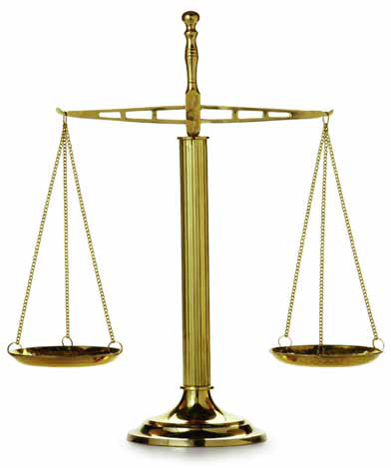
a.MassMeasurement
Measuring instruments usedto measure
themass of an objectis thebalance sheet. Based onhow it worksand the accuracy
balance sheetis divided intothree, namely: 1. Digitalbalance,
thebalancethat
workswithelectronicsystems. Accurate andup
to0,001g
2. O'Haussbalance, iethe balance sheetwitha level of accuracyup to0:01g.
3. Equalarmbalance, iethe balance
sheetwitha level of accuracyup to 1mgor0.001
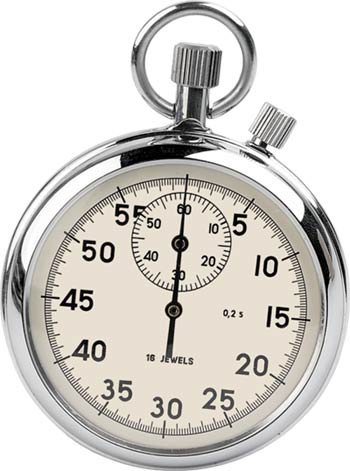
c. TimeMeasurement
Internationalunitfortimeisseconds or seconds. Thesecondstandardis thetimeneededbyCesium-133
atomtovibrate9,192,631,770timesas much. The tools usedto measure time, among othersundials, clocks, watches(with a precision of 1second),
and astopwatch(nearest
0.1 second).